Showing posts with label antagonist. Show all posts

Wednesday, February 15, 2012

Look for my new CD next month: Memories . . . of Now

"Now will I stir this gamester: I hope I shall see an end of him; for my soul, yet I know not why, hates nothing more than he" (As You Like It, I.i.5).

Sometimes in literature, we have a Harry and a Voldemort, a Luke Skywalker and an Emperor, or an Othello and an Iago. However, in As You Like It (in your pants), identifying a protagonist and antagonist is difficult and perhaps [dramatic pause] impossible. I'm going to try and see what happens.

Let's start with potential antagonists. We first have Oliver who says that quote up there about how he hates his brother Orlando for no good reason. Then, we have Duke Frederick, who unlawfully banished his brother Duke Senior and then later Duke Senior's daughter just because she is her "father's daughter" (I.iii.13). It seems to me that Duke Frederick is a tad more evil than Oliver -- he commands Oliver to bring Orlando to him "dead of living" and then threatens him with seizure of his "lands and all things" (III.i.34). The problem here is that Oliver has a quick change of heart and falls in love with Aliena/Celia, AND Duke Frederick was converted by some "old religious man" at the conclusion (V.iv.77). If I had to pinpoint an antagonist, I would say that it's Duke Frederick, although he's not a typical antagonist when he changes his ways in Act V.

I don't think I can identify a single protagonist because most of the characters are just so . . . nice and good. Forgive the four-year-old vocabulary, but it's true. Touchstone is kind of vulgar and perverted, I guess. The most central character in the play is Rosalind, perhaps, so if I have to pick someone, I guess I'll pick her. Sense my enthusiasm here.

If I, at any point, refer to Duke Senior as "Duke Silver," please forgive me. This is the fault of Parks and Rec.

Thursday, January 26, 2012

Any other Iago fans?

"IAGO. She was a wight, if ever such wight were --

DESDEMONA. To do what?

IAGO. To suckle fools and chronicle small beer" (Othello, II.i.157-159).

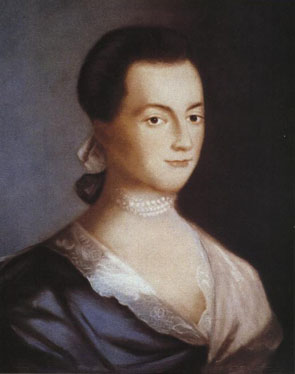
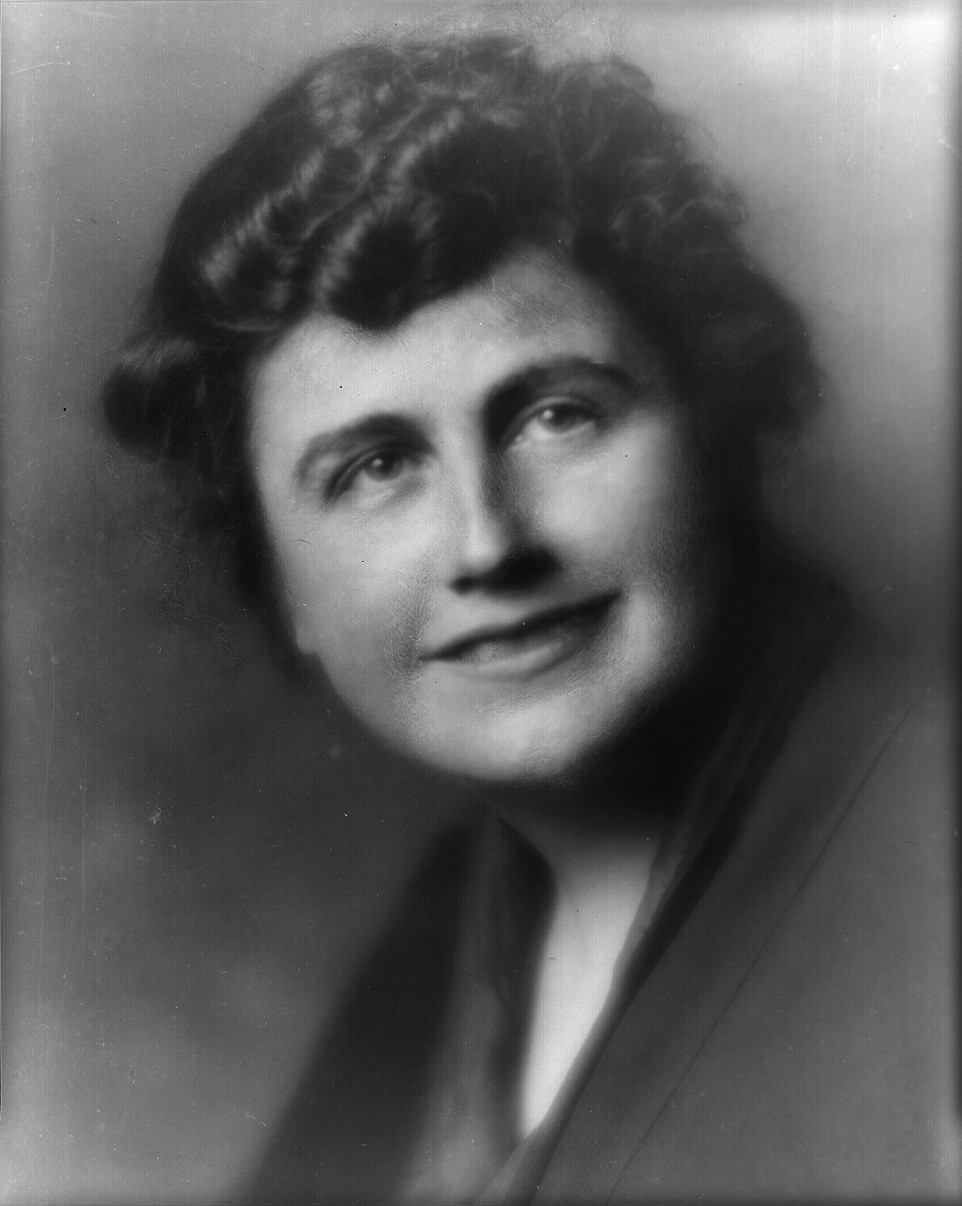
I mean, if anything, I'm a feminist -- go, Abigail Adams and Margaret Sanger! (apparently, I need more pictures of American women in this blog) -- but this part was really funny, and not because I agree with Iago. I think I find humor in the fact that since Shakespeare's time, we haven't really made much progress in sexist jokes.


Let's identify the protagonist and antagonist. I previously mentioned that Iago is the antagonist, and I believe Othello would be considered the protagonist. And if the hero really always dies in Shakespearean tragedies -- well, sorry about your luck, Othello.

Now, let's talk about why I like Iago, which is potentially controversial.

1. Iago is an extremely round character; I mean, his character is a perfect circle. He's wicked smart and clever, he has experience serving his state, and he wants to see justice in action (at least when he's faced with the injustice, which brings me to . . .).

2. Iago has right on his side. I agree -- planning to frame and murder somebody, lie to just about everybody, and treat one's wife with childish contempt is a bit of an overreaction to not getting a desired promotion -- but gosh darn it, Iago should have been appointed lieutenant.

3. Iago makes the play interesting. Think of how crappy this story would be if Iago gave in and decided that Cassio is a worthy lieutenant.

4. Iago is telling me the story as we go along. Iago is anything but withholding, and I appreciate the fact that he's keeping me and not the other characters in the loop. It makes me feel special.

5. Iago is funny in an astutely vulgar way, as we witnessed above.

Seeing into the Mind of Iago

"Thus do I ever make my fool my purse, / For I mine own gained knowledge should profane / If I would time expend with such a snipe / But for my sport and profit. I hate the Moor, / And it is thought abroad that 'twixt my sheets / He's done my office. I know not if 't be true, / But I for mere suspicion in that kind / Will do as if for surety" (Othello, I.iii.363-370).

I was going to shorten that quote, but I just had to keep typing -- everything Iago says is pure gold.

What we have here is a significant contrast between what the audience knows and what the characters know. In Othello, the only character who has a firm handle on what's actually going on is Iago. (This is essentially due to the fact that this play is from the vantage point of Iago, who is actually the antagonist.) Here, he establishes a contrast between what the audience knows and what Roderigo and Othello know. Roderigo believes that Iago will help him win back Desdemona if he gives Iago money, but Iago is using him for his "sport and profit." Othello believes that Iago is an honest ensign, but Iago is planning his revenge against Othello who (a) appointed Cassio as his lieutenant rather than Iago and (b) maybe slept with his wife, Edith. I mean, Emilia -- why do I have issues with that name? Maybe it's just because I'm a fan of Edith Wilson.


Iago delivers another soliloquy at the end of Act II to reveal his plan to plant a seed of suspicion that Cassio is spending time 'twixt the sheets with Desdemona, Othello's wife.

What sort of breaks this special relationship Iago has with the audience is that in Act III, Othello begins to share private information with the audience in addition to Iago. In one soliloquy, Othello expresses his internal concerns about Desdemona potentially sleeping with Cassio (III.iii.259-78). However, still, Othello doesn't know the half of what's really going on -- an instance of dramatic irony. Only Iago and the audience can share in the fullness of truth.

Wednesday, November 9, 2011

Evidence that I need to sleep:

"We did not say she was crazy then. We believed she had to do that" ("A Rose for Emily," 28).

This is not going to be one of my most profound blog posts. I would just like to express my confusion and theories about the conflicts within these three short stories. Specifically, I'm going to try to identify the protagonists and the antagonists of all of the stories, which is mostly speculative and kind of difficult for me. I don't expect these to be completely accurate. Then, I will pose a question about "A Rose for Emily."

How I Met My Husband:

  • Protagonist: Edie (the central character -- this one is easy to identify)
  • Antagonist: Herself (maybe? Specifically, Edie's past self before she became "wiser")
Interpreter of Maladies:
  • Protagonist: Mr. Kapasi (alternatively, Mrs. Das, as a lot of action revolves around her)
  • Antagonist: Umm, himself (an internal conflict about Mrs. Das, perhaps; if the protagonist is Mrs. Das, I would say the antagonist is herself, as well, due to her unstable family life)
A Rose for Emily:
  • Protagonist: Emily (alternatively, the town as a collective "we," but the action revolves more around Emily, I think)
  • Antagonist: The town ("we"), who always seem to be working against her (alternatively, Emily if the town is the protagonist)
Here's my question. Let's say that the protagonist of "A Rose for Emily" is indeed Emily. Recalling that the book defines a "happy ending" as the solving of the protagonist's problems, and observing that Emily solved her problem with Homer by murdering him, doesn't "A Rose for Emily" have a happy ending?