"'Wreck!' said Tom. 'That's good. Wilson'll have a little business at last'" (The Great Gatsby, 137).
It's one of those books that gives you a warm and fuzzy feeling once you've finished. Okay, maybe not.
But there's plenty of humor! I'm into dark humor that makes me laugh and writhe around simultaneously, and this quote is an excellent example of what I like to read. Wilson's wife has just been hit by a car, but all that Tom knows is that there's a crowd of people and cars around his gas station. Here, Fitzgerald achieves dark humor through dramatic irony. The audience knows that Myrtle has died, and Tom has no idea that he has just said one of the most insensitive things that could have come out of his mouth.
But that's certainly not the only time I got the giggles! I particularly enjoy when Nick realizes, "'No . . . I just remembered that today's my birthday'" (135). At first, it seems like a juxtaposition of a celebratory event with the catastrophic events of the day. So I laughed when I read that part. But once Nick starts to follow up on his birthday comment, I start to realize that to him, turning thirty just adds to the list of catastrophic events. He has a little mid-life crisis: "Thirty -- the promise of a decade of loneliness, a thinning list of single men to know, a thinning briefcase of enthusiasm, thinning hair" (135). At that point, it isn't really all that funny anymore -- it just ends up being really sad.
Showing posts with label dramatic irony. Show all posts
Showing posts with label dramatic irony. Show all posts
Sunday, April 29, 2012

Sunday, April 1, 2012
Remorse, Horror, Despair, and Serial Commas
"'I truly thank him. In these last moments I feel the sincerest gratitude towards those who think of me with kindness. How sweet is the affection of others to such a wretch as I am! It removes more than half my misfortune; and I feel as if I could die in peace, now that my innocence is acknowledged by you, dear lady, and your cousin'" (Frankenstein, 59).
As if I'm not already queasy at the notion of the deaths of two innocent characters, this quote hits me right in the groin. Metaphorically. Also, it's an example of dramatic irony.
In her letter to Victor, Elizabeth describes Justine's character as "clever" and "gentle" (42). In her testimony during the trial, Elizabeth describes her further as "amiable and benevolent" (56). Justine is so good natured and innocent that her ironic quote above kindles ghastly anguish in Victor.
Victor feels partly -- scratch that, entirely -- responsible for the deaths of William and Justine. He knows that "the filthy daemon to whom [he] had given life," not Justine, is William's murderer (50). Only he and the audience have this information; Justine merely knows that she is innocent and will never know that Victor's creature is guilty.
Therefore, when she expresses her gratitude toward Victor (who believes wholeheartedly in Justine's innocence), from her perspective, it's just another example of her benevolence. However, Victor and the audience know that the only reason he knows of Justine's innocence is that Victor knows his own creation murdered William. The discrepancy between Justine's perception and Victor's reality invigorates the "remorse, horror, and despair" he feels. (See how Victor uses the serial comma? Good man.)
Also, William and Justine are "the first hapless victims to my unhallowed arts" (60)? "Good God," indeed.
Tuesday, January 31, 2012
Suspense!
"Do it not with poison, strangle her in her bed, even the bed she hath contaminated" (Othello, IV.i.191-2).

One of the questions in the book asks how Shakespeare creates dramatic suspense -- in other words, what makes the reader ask, "What's going to happen next?" The quote above is an instance of dramatic irony PLUS an example of where the reader awaits the fates of characters, two main factors in the suspense of this play.
Dramatic irony is a driving force behind the suspense in Othello. The Moor of Venice endows Iago with the epithet "honest" because he believes Iago that Cassio and Desdemona are having an affair. This explicitly conflicts with what the audience knows: that Desdemona is honest, and Iago is the disloyal character to Othello. While that's the main irony in the play, other examples appear -- "Oh, no," speaks Iago of Othello to Roderigo, "he goes into Mauritania, and takes away with him the fair Desdemona, unless his abode be lingered here by some accident, wherein none can be so determinate as the removing of Cassio" (IV.ii.217-9). This is a false statement, but Roderigo does not know that -- Iago successfully manipulates him to kill (or at least pathetically try) to kill Cassio. The question from the reader then becomes, "When and how will these clueless characters* figure out what's actually going on here?"
Another creation of suspense is the audience's awaiting the fates of the characters. Obviously, since this is the Tragedy of Othello, Othello is going to die somehow -- but how? The quote above builds suspense because it lays out the plan for Desdemona's death. Will Othello be successful in this scheme? If so, how will that affect Othello, her husband, and Emilia, her friend? More importantly, while killing Desdemona, will he go with a pillow or just use his hands? I'm just asking a bunch of questions to which I already know the answers, but those were the questions I was asking myself as suspense built.
*clueless characters: everyone but Iago
Thursday, January 26, 2012
Seeing into the Mind of Iago
"Thus do I ever make my fool my purse, / For I mine own gained knowledge should profane / If I would time expend with such a snipe / But for my sport and profit. I hate the Moor, / And it is thought abroad that 'twixt my sheets / He's done my office. I know not if 't be true, / But I for mere suspicion in that kind / Will do as if for surety" (Othello, I.iii.363-370).
I was going to shorten that quote, but I just had to keep typing -- everything Iago says is pure gold.
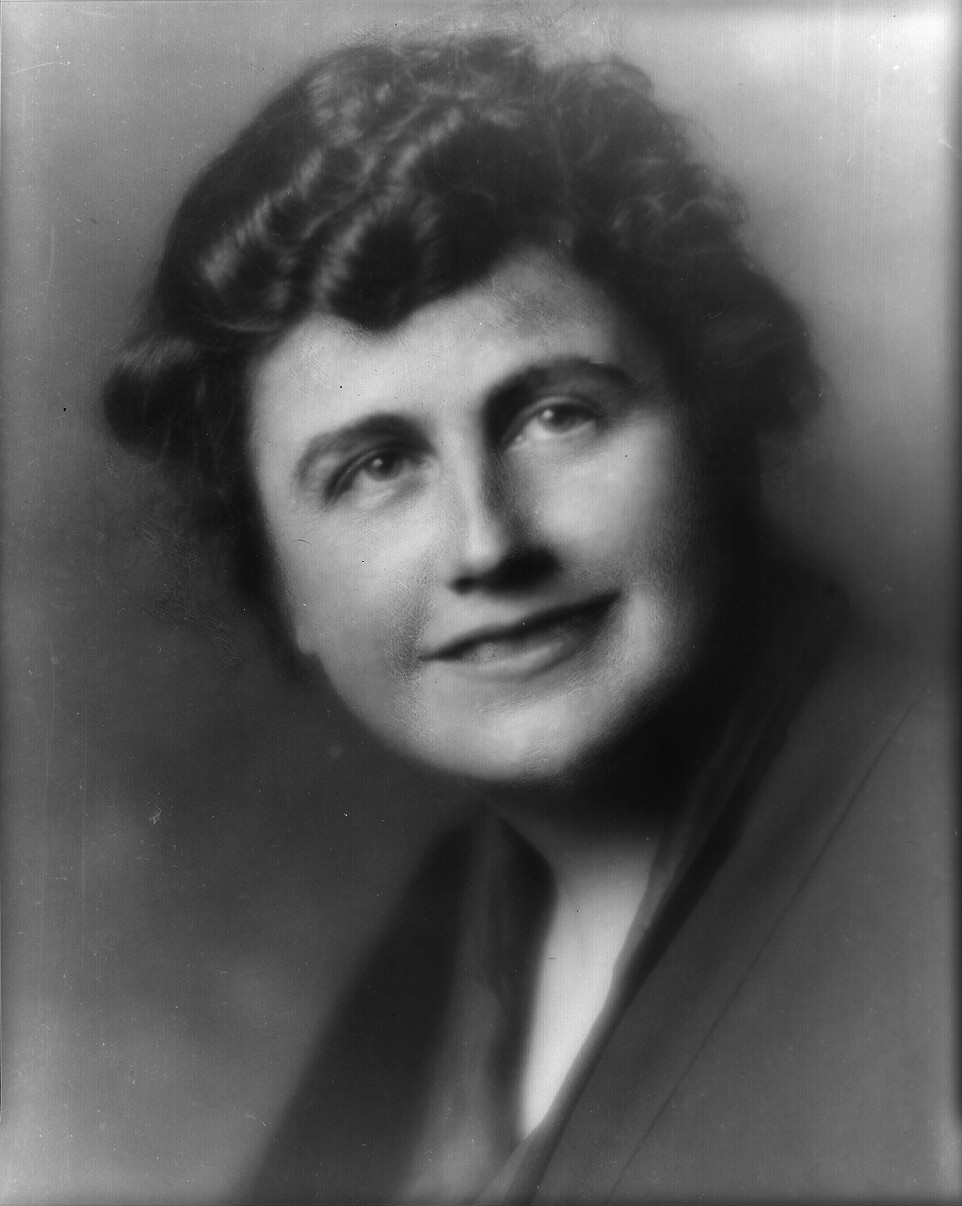
What we have here is a significant contrast between what the audience knows and what the characters know. In Othello, the only character who has a firm handle on what's actually going on is Iago. (This is essentially due to the fact that this play is from the vantage point of Iago, who is actually the antagonist.) Here, he establishes a contrast between what the audience knows and what Roderigo and Othello know. Roderigo believes that Iago will help him win back Desdemona if he gives Iago money, but Iago is using him for his "sport and profit." Othello believes that Iago is an honest ensign, but Iago is planning his revenge against Othello who (a) appointed Cassio as his lieutenant rather than Iago and (b) maybe slept with his wife, Edith. I mean, Emilia -- why do I have issues with that name? Maybe it's just because I'm a fan of Edith Wilson.

Iago delivers another soliloquy at the end of Act II to reveal his plan to plant a seed of suspicion that Cassio is spending time 'twixt the sheets with Desdemona, Othello's wife.
What sort of breaks this special relationship Iago has with the audience is that in Act III, Othello begins to share private information with the audience in addition to Iago. In one soliloquy, Othello expresses his internal concerns about Desdemona potentially sleeping with Cassio (III.iii.259-78). However, still, Othello doesn't know the half of what's really going on -- an instance of dramatic irony. Only Iago and the audience can share in the fullness of truth.
I was going to shorten that quote, but I just had to keep typing -- everything Iago says is pure gold.
What we have here is a significant contrast between what the audience knows and what the characters know. In Othello, the only character who has a firm handle on what's actually going on is Iago. (This is essentially due to the fact that this play is from the vantage point of Iago, who is actually the antagonist.) Here, he establishes a contrast between what the audience knows and what Roderigo and Othello know. Roderigo believes that Iago will help him win back Desdemona if he gives Iago money, but Iago is using him for his "sport and profit." Othello believes that Iago is an honest ensign, but Iago is planning his revenge against Othello who (a) appointed Cassio as his lieutenant rather than Iago and (b) maybe slept with his wife, Edith. I mean, Emilia -- why do I have issues with that name? Maybe it's just because I'm a fan of Edith Wilson.
Iago delivers another soliloquy at the end of Act II to reveal his plan to plant a seed of suspicion that Cassio is spending time 'twixt the sheets with Desdemona, Othello's wife.
What sort of breaks this special relationship Iago has with the audience is that in Act III, Othello begins to share private information with the audience in addition to Iago. In one soliloquy, Othello expresses his internal concerns about Desdemona potentially sleeping with Cassio (III.iii.259-78). However, still, Othello doesn't know the half of what's really going on -- an instance of dramatic irony. Only Iago and the audience can share in the fullness of truth.
Tuesday, September 20, 2011
next to of course sharp cheddar coherent poems i
"centuries come and go and are no more what of it we should worry in every language even deafanddumb" ("next to of course god america i," 4-6).
as i read this poem i wondered if i was allowed to write in punctuation in the above quote i would probably add a period after more a question mark after it and a dash after language lack of capitalization i can deal with but punctuation matters so says the poster in mr costello's wall will you let me be yours gloria
i can say a few things for certain that jingoism is extreme nationalism and that the first few lines recite patriotic songs for instance question four asks if cummings admires the dead who did not stop to think based on the fact that this question was asked and we're on a unit of irony i will say no
the last line does little more for me than establish a speaker who drinks rapidly a glass of water after reading this poem i'd like to rapidly throw it against the wall that split infinitive was definitely necessary however i feel like i'm going to have to answer multiple choice questions about it
Wednesday, June 15, 2011
Huxley is going to get less wordy.
"'Isn't it beautiful!' His voice trembled a little.
"She smiled at him with an expression of the most sympathetic understanding. 'Simply perfect for Obstacle Golf,' she answered rapturously" (Brave New World, 59).
 All of the math in that picture is wrong because there are eighteen chapters -- not nineteen -- but you get the spirit of it.
Most of the characters in Brave New World are indirectly characterized, and their appearances and speech reveal who they are. The only exception so far is Benito Hoover who is characterized directly as "notoriously good-natured" (60), probably because he's minor.
I think there are two groups we can assign to these characters.
One group would contain people with "a mental excess" (67) like Bernard Marx and Helmholtz Watson. According to Huxley, these two share the "knowledge that they are individuals" -- they're outsiders. For this reason, I think that they're going to be dynamic in moving the plot forward.
The other group would contain everyone else -- the Director, the students, Henry Foster, Lenina, Fanny, and Benito. These people conform to the customs of their world because they have no other choice. Hypnopaedia gives the vast majority of characters ideas and prejudices they cannot escape on their own. Maybe the people in Group One will help them out, but I don't think these characters can make an interesting story on their own.
The quote I chose for this post shows the fascinating and almost comical boundary between these two groups. As Bernard finds true beauty in the sky, Lenina "understands" him and agrees that it's good weather to play golf. I think this is dramatic irony because Lenina thinks she's sympathizing with Bernard when the reader knows that the kinds of beauty the two characters see are completely different.
"She smiled at him with an expression of the most sympathetic understanding. 'Simply perfect for Obstacle Golf,' she answered rapturously" (Brave New World, 59).

Most of the characters in Brave New World are indirectly characterized, and their appearances and speech reveal who they are. The only exception so far is Benito Hoover who is characterized directly as "notoriously good-natured" (60), probably because he's minor.
I think there are two groups we can assign to these characters.
One group would contain people with "a mental excess" (67) like Bernard Marx and Helmholtz Watson. According to Huxley, these two share the "knowledge that they are individuals" -- they're outsiders. For this reason, I think that they're going to be dynamic in moving the plot forward.
The other group would contain everyone else -- the Director, the students, Henry Foster, Lenina, Fanny, and Benito. These people conform to the customs of their world because they have no other choice. Hypnopaedia gives the vast majority of characters ideas and prejudices they cannot escape on their own. Maybe the people in Group One will help them out, but I don't think these characters can make an interesting story on their own.
The quote I chose for this post shows the fascinating and almost comical boundary between these two groups. As Bernard finds true beauty in the sky, Lenina "understands" him and agrees that it's good weather to play golf. I think this is dramatic irony because Lenina thinks she's sympathizing with Bernard when the reader knows that the kinds of beauty the two characters see are completely different.
Subscribe to:
Posts (Atom)